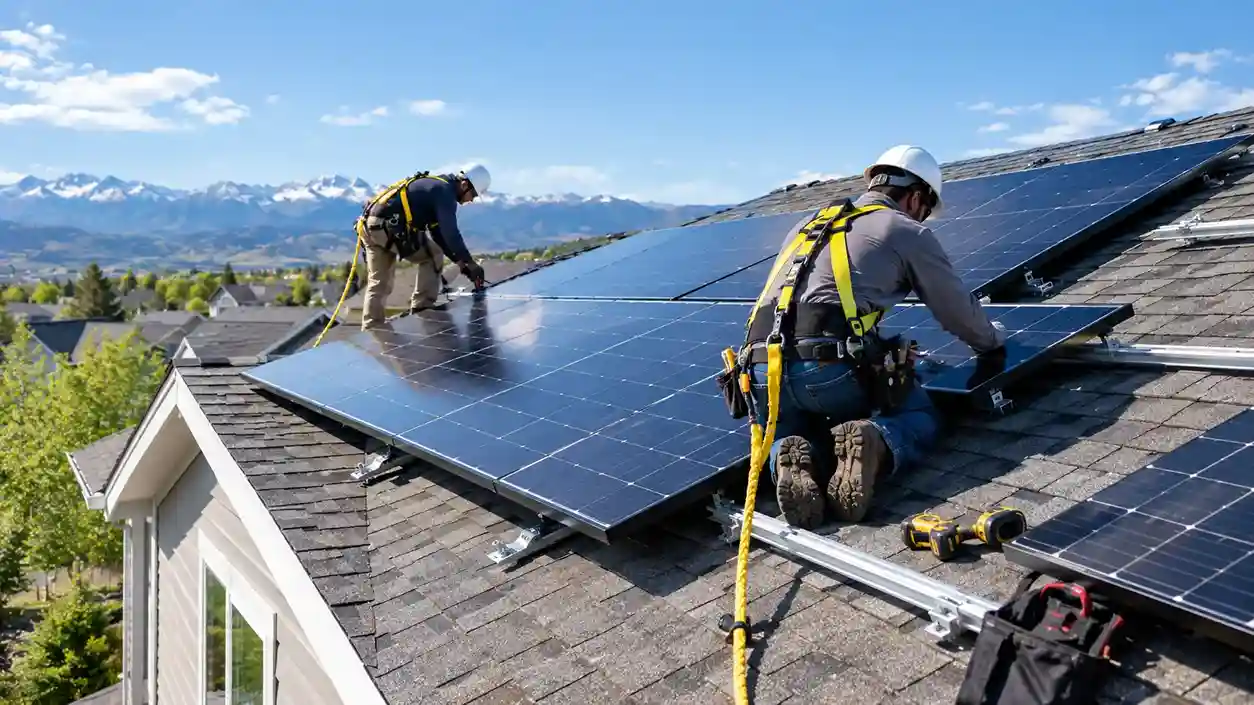
Residential solar solutions are the panels, batteries, and services that let a home produce its own electricity. In Colorado they can still make financial sense even though the 30% federal tax credit ended for systems installed after December 31, 2025. Whether solar is worth it for your home comes down to four things: how much electricity you use, how much sun your roof gets, how your utility credits the power you export (net metering), and how long you plan to stay in the house. Payback is longer than it was with the federal credit, so the numbers deserve a closer look than they used to.
This guide walks through how home solar installation works in Colorado, which incentives are still in play, how to estimate your own payback, and what to check before you sign a proposal.
What Are Residential Solar Solutions?
A solar panel system is only one piece. A complete residential solar solution usually covers system design, permitting, utility paperwork, installation, and ongoing service, and for a growing number of homeowners it also includes batteries for backup power and efficiency upgrades that shrink the system you need in the first place.
Depending on where your home is in its life, that can look like:
- A new build: solar planned in from the start through new home installation, added once the roof is finished.
- An existing home: a rooftop system sized to your actual usage through existing home installation.
- A system you already own: repairs, upgrades, or capacity added after you buy an EV or build an addition, through existing solar service.
- A roof that needs work: panels temporarily removed and put back through detach and reset.
You can see the full range on our residential solar page.
How Home Solar Installation Works in Colorado
Most projects follow the same path, whichever installer you choose:
Usage review and proposal. A good proposal starts with your past electric bills, not a guess. Sizing a system without looking at your real usage is how homeowners end up covering only part of their needs.
Site and roof assessment. Roof age, orientation, shading, and your electrical panel all affect what is possible.
Permits and utility application. Your city or county issues the building permit, and your utility has to approve the interconnection.
Installation. For a typical residential system the physical install is often finished in about a day.
Inspection and permission to operate. The system is inspected, the utility signs off, and only then do you switch on.
Timelines vary with city permitting and utility queues. One Colorado homeowner who reviewed Pro Bid Energy reported seven weeks from first contact to turning on their panels, with the install itself done in a day. Treat that as one example, not a promise.
Is Solar Worth It in Colorado?
Yes for homes with high electricity use, a sunny and unshaded roof, and owners who plan to stay for a decade or more. It is less compelling for low-usage homes, heavily shaded roofs, or people planning to move within a few years. Colorado’s sunshine and retail-rate net metering help, but the loss of the federal credit pushed payback out.
The federal tax credit is gone
The 30% Residential Clean Energy Credit (Section 25D) covered solar panels and batteries, but only for systems installed by December 31, 2025. If you installed in 2025 you can still claim it on that year’s return; for new projects it no longer applies. Anyone quoting you a price that assumes a 30% credit on a new 2026 install is working from outdated numbers, so ask them directly how they treated it.
A simple way to estimate your payback
The math is easier than it looks. Here is a hypothetical example using round numbers, not a quote:
- A 6 kW system in much of Colorado might produce somewhere around 1,400 to 1,600 kWh per installed kW per year. Call it about 9,000 kWh annually.
- If your utility rate works out to roughly 15 cents per kWh, that is about $1,350 in avoided electricity costs per year.
- If the system’s net cost after any incentives is $18,000, simple payback lands near 13 years.
Your numbers will differ. A higher rate, higher usage, or lower net cost shortens the timeline; the reverse lengthens it. Solar panels are typically warrantied for 25 years by many manufacturers, so years after payback are mostly savings, as long as you stay and the system performs. You can sanity-check production for your roof with the free NREL PVWatts calculator.
Does solar add to your home’s value?
It can. A Zillow analysis found homes with solar panels sold for roughly 4% more on average than comparable homes without them, which Zillow put at about $9,200 for a typical home. Results depend on your market and system, and buyers do not always pay full value for a system they would have to take over, so treat this as a supporting benefit rather than the reason to go solar.
Do You Need a Battery With Your Home Solar?
Not necessarily, but it is worth understanding the tradeoff. A standard grid-tied solar system shuts off during a blackout. That is a safety feature that protects utility workers, but it also means your panels will not keep the lights on by themselves.
Pairing panels with a battery and a compatible inverter changes that. Depending on how you size it, a battery can back up your whole home or just the essentials like the fridge, internet, and a few circuits. It can also be programmed to run your home during expensive peak-rate hours and recharge from your panels the next day. The federal credit that once covered batteries ended along with the solar credit, so price a battery on its own merits: how often your area loses power, what you need to keep running, and whether your utility has peak pricing.
If you are weighing batteries against a gas generator, our backup power page explains both options.
Shrink the Need Before You Size the System
The cheapest kilowatt-hour is the one you never use. Sealing air leaks and adding attic insulation can lower annual energy bills by up to around 10%, and a more efficient heat pump or LED lighting trims more. A smaller load means a smaller, cheaper solar system. If you are already planning to replace gas appliances or heating, look at building electrification and weatherization alongside your solar quote so the system is sized for the home you will have, not the one you have now.
How to Compare Solar Quotes
Two proposals for the same house can look very different. Before you choose, ask each installer:
- What usage did you base the system size on? Look for your actual 12-month history, not an estimate.
- What production does the proposal assume, and how was it calculated? Compare it with PVWatts.
- Who handles permits and utility interconnection? The paperwork is a real part of the job.
- What equipment is included, and what are the warranties? Panels, inverter, and workmanship each have their own.
- How was the federal credit treated? For new installs it should not appear as a savings line.
- What is the roof condition? If the roof needs work soon, plan for it now.
- Who services the system after installation? Local support matters when something needs a visit.
Talk to a Colorado Solar Specialist
Pro Bid Energy is based in Commerce City, Colorado, and has worked directly with homeowners since 2019 after starting in 2015 as a back-office partner to other solar companies. Our consultants help match your energy needs to the right equipment and sort out which local and utility incentives apply to you. Request a free quote or call (303) 623-1531.
Frequently Asked Questions
Is solar worth it in Colorado without the federal tax credit?
For many homeowners with high electricity use and a good roof, yes, though payback takes longer than it did with the 30% credit. Net metering, the property tax exemption, and the sales and use tax exemption still improve the numbers. The most reliable answer comes from a proposal built on your own usage and utility rate.
How does net metering work in Colorado?
Net metering credits you for the electricity your panels send to the grid, so you pay only for what you use beyond what you produce. For investor-owned utilities such as Xcel Energy and Black Hills, credit applies up to 120% of your electricity demand. Municipal and cooperative utilities have their own limits, and excess credits can roll over month to month.
Will solar panels raise my property taxes in Colorado?
Generally no. Colorado exempts residential solar systems under 100 kW AC from property tax, so the value they add to your home is excluded from your assessment.
Do solar panels work during a power outage?
Not on their own. Grid-tied systems shut down in a blackout for safety. With a battery and a compatible inverter, a system can keep power flowing to part or all of your home.
How long does home solar installation take?
The installation itself is often a day or two, but the full process, including permits, utility approval, and inspection, commonly takes several weeks. Your city and utility set much of the schedule.
Can I add solar to a home that is still being built?
Yes. Panels go on after the roof is finished and shingled, so planning early lets the electrical work be designed around them. Learn more about solar for new homes or our homebuilder services.
What if my existing solar system is not producing enough?
Usage changes. New EVs, hot tubs, or room additions can outgrow a system sized years ago. Our existing solar service team can check performance and recommend upgrades.